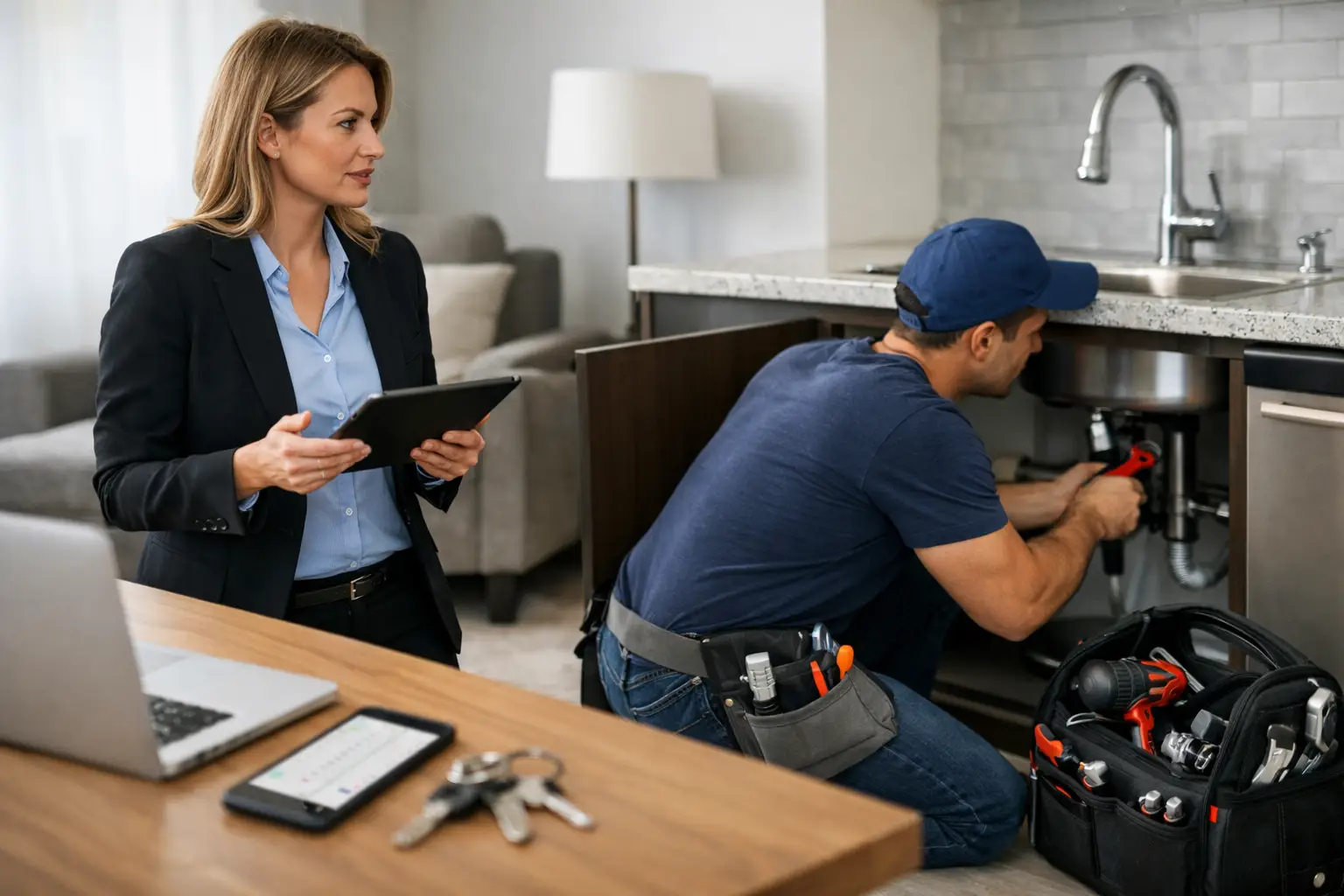
A repair can be technically simple and still become an operational failure. The issue is usually not the drywall patch, leaking valve, or damaged door hardware. It is the missed access window, unclear notice, absent resident, or contractor who leaves no proof of what happened. To schedule occupied unit repairs correctly, property teams need a repeatable process that protects resident experience while keeping maintenance work moving.
For multifamily operators, the goal is not merely to put a technician on the calendar. The goal is confirmed access, a defined scope, clear responsibility, and a documented closeout. That is how you stop chasing contractors and stop turning routine work orders into a chain of follow-up calls.
Why occupied repair scheduling breaks down
Occupied-unit work has more variables than a vacant turn. A resident may work nights, have pets, need accommodation for a medical condition, or simply not see an email until after the scheduled appointment. Meanwhile, the repair may require parts, a second trade, utility shutoff, dry time, or access to an adjacent unit.
The common mistake is treating all work orders the same. A loose cabinet hinge can often be handled in a standard service window. A plumbing leak behind a vanity cannot wait for the next open appointment. The scheduling process must reflect urgency, repair complexity, and the resident’s access requirements.
Poor scheduling also creates a documentation problem. If no one can confirm whether notice was delivered, whether entry was authorized, or whether the technician arrived, the property manager is left reconstructing the event from texts and voicemail. That wastes time and exposes the operation to avoidable disputes.
Schedule occupied unit repairs with a triage-first process
The calendar should never be the first decision. Start with triage. Classify the work order by urgency and determine what must happen before a technician arrives.
Emergency conditions such as active water intrusion, loss of essential services, electrical hazards, or conditions that threaten safety need immediate dispatch under the property’s emergency-entry procedures. Urgent repairs may need same-day or next-day action but still require resident coordination when safe to do so. Routine repairs can be grouped into planned appointment blocks that use labor more efficiently.
Then confirm the scope. Ask whether the technician needs the resident present, whether pets must be secured, whether a utility shutoff is required, and whether the repair could create noise, dust, odor, or restricted use of a room. A work order that says “fix wall” is not ready to schedule. A work order that says “repair 3-by-4-foot drywall opening behind bathroom vanity, inspect for moisture, resident must secure dog” is.
This step prevents the most expensive kind of dispatch: the one that cannot be completed.
Set a realistic service window
Avoid promising an exact arrival time unless the work truly supports it. Field conditions change. Emergency calls, material pickups, tenant access issues, and longer-than-expected repairs can shift a technician’s route.
A defined service window is usually more practical. For example, morning and afternoon blocks give residents a reasonable expectation while allowing the field team to manage the route. For repairs that require a resident to be home, use a narrower window only after confirming technician availability and material readiness.
The trade-off is straightforward. Tighter appointment windows can improve resident convenience, but they reduce routing flexibility and can increase missed commitments if the schedule has no buffer. Reserve those windows for high-priority repairs, residents with documented needs, or work that requires direct coordination.
Build resident communication into the work order
A scheduled appointment is not confirmed because an email was sent. It is confirmed when the resident has received the notice, understands the access expectation, and has a clear way to respond.
Use the communication methods your community has established, whether that includes portal notifications, text messages, email, phone calls, or written notice. Keep the message direct: the repair type, date, service window, access requirement, preparation needed, and contact point for rescheduling. Do not make residents hunt for the information that affects their day.
For work involving water shutoffs, power interruptions, heavy dust, or multiple visits, communicate earlier and more specifically. Residents can tolerate inconvenience better when they know what is happening and how long it may last. They are far less patient when a technician arrives without context and asks them to clear a bathroom or kitchen on the spot.
Document each communication attempt in the work order. The record should show when notice was sent, the channel used, any resident reply, and the final access status. This is not administrative clutter. It gives the property team a clean record when a resident disputes an appointment or a contractor reports no access.
Respect notice requirements and lease terms
Entry rules vary by lease language, property policy, and applicable Nevada requirements. Property managers should apply their established notice procedures consistently and use emergency-entry protocols only when the situation warrants them.
Contractors should not be making access decisions in the field without direction. The work order should identify whether entry is authorized, whether a resident will be present, and who to contact if access is unavailable. Clear authority protects the resident, the onsite team, and the technician.
Dispatch the right technician with the right information
Occupied-unit repairs demand preparation. Sending a general technician to diagnose every issue may be appropriate for some service calls, but it is inefficient when the scope already points to a specialty repair. Finish carpentry, drywall restoration, plumbing-related wall repair, and electrical work each have different material and access requirements.
Before dispatch, make sure the technician has unit details, resident notes, photos when available, parking or gate instructions, known hazards, and the approved scope. If the work requires materials, verify they are on hand or scheduled for pickup. If it requires follow-on work, build that into the plan rather than leaving the resident with an open wall and a vague promise to return.
For larger repairs, schedule in phases. The first visit may involve investigation, containment, demolition, or measurement. A later visit may be needed for installation, drying, texture, paint, or final cleanup. Tell the resident this upfront. Overpromising a one-visit solution is one of the fastest ways to create frustration.
Use field verification to close the loop
A technician leaving the property is not the same as a completed repair. Closeout should verify what was done, what materials were used if relevant, whether the resident raised a concern, and whether additional work is required.
At minimum, the repair record should capture arrival and completion times, job notes, before-and-after photos when appropriate, and the status of the work order. GPS-verified arrival and completion data can add another layer of accountability, especially across large portfolios where managers cannot personally inspect every job.
If the repair could not be completed, document why: no access, resident declined entry, part needed, hidden damage found, or scope changed. Then assign the next action before the work order goes quiet. An incomplete job with no owner is not pending work. It is a future escalation.
Well Done Construction LLC uses mobile-first dispatch and documented job completion because property managers need more than verbal reassurance. They need a repair history that can be reviewed, shared, and acted on without sorting through scattered messages.
Reduce no-access appointments without overbooking
No-access calls will happen. Residents forget, schedules change, and emergencies disrupt plans. The answer is not to overbook every technician until the route becomes impossible to manage.
Instead, track no-access patterns by property, unit, repair category, and communication method. If a community consistently has missed morning appointments, test afternoon windows or a confirmation text the day before. If a certain repair type frequently requires a resident present, make that requirement more visible when the appointment is set.
It also helps to maintain a short list of nearby, low-disruption tasks that can fill a gap when access fails. Common-area touch-ups, vacant-unit punch work, or pre-approved exterior items can keep labor productive without sacrificing the rest of the route.
Make occupied repairs part of a maintenance system
The strongest scheduling process is not a one-time checklist. It is a maintenance operating standard. Work orders come in with consistent information. Residents receive clear notices. Technicians know the access rules. Managers can see status without asking for updates. Completed work is documented before the ticket is closed.
That system matters most when volume rises. A single missed repair is annoying. Ten missed repairs across several properties can damage resident trust, overload onsite staff, and create a backlog that costs more to clear than it should.
Every occupied-unit appointment should leave the property team with more control than it had before: a confirmed record, a clear status, and a next step if the work is not finished. That is the standard worth scheduling around.