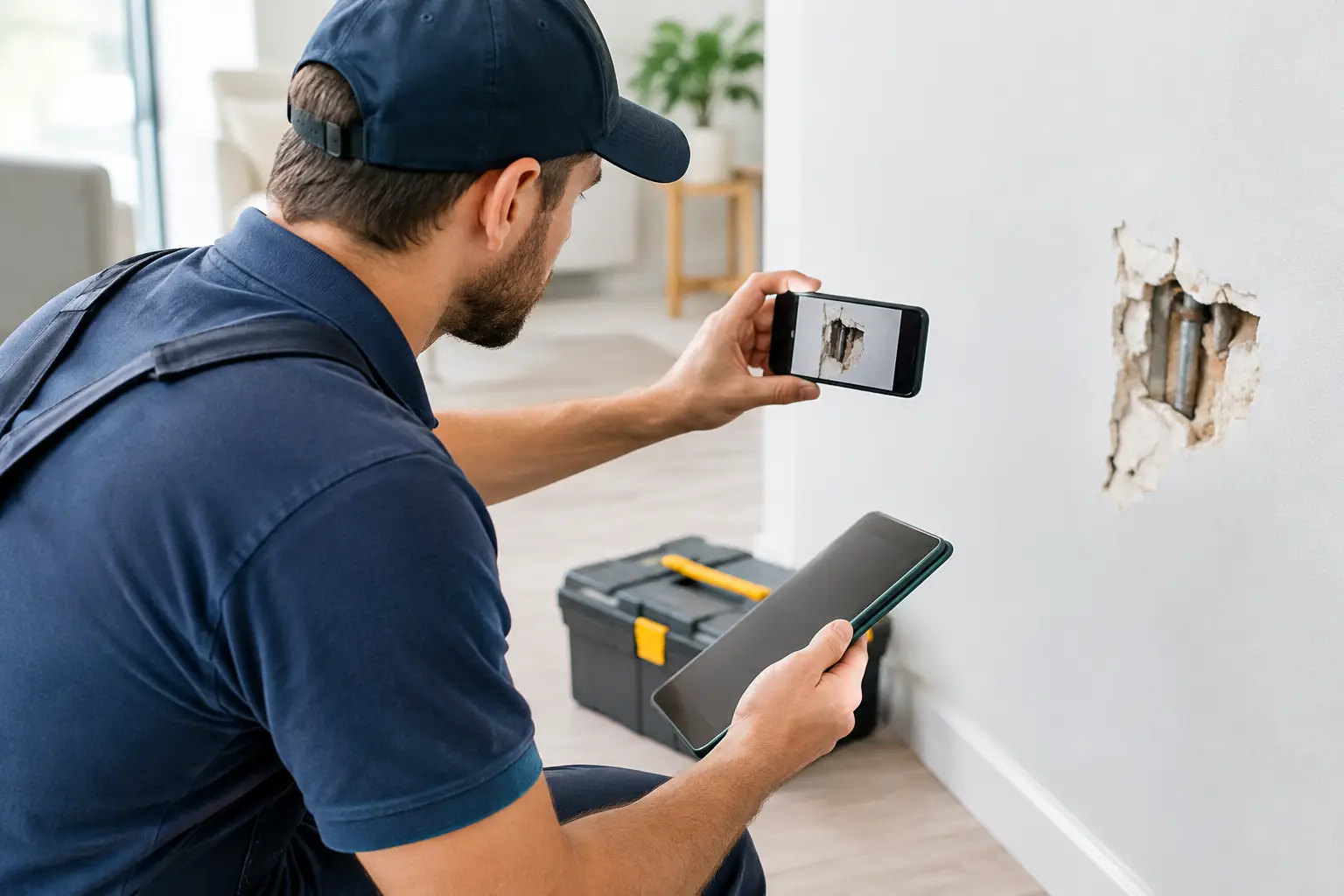
A repair is not fully complete when the technician leaves the unit. It is complete when the property team can see what was reported, what was found, what was approved, what was repaired, and when it was finished. That is how to document repair work without creating more follow-up, billing disputes, or unanswered questions for your office.
For multifamily and commercial property operators, documentation is not busywork. It is the record that protects the asset, supports resident communication, validates vendor invoices, and gives the next person who touches the space a clear starting point. A vague work order with “fixed leak” in the notes is not a repair history. It is a future problem waiting to resurface.
Why repair documentation affects operations
Property managers are already coordinating resident access, vendor schedules, budgets, turns, inspections, and owner reporting. When repair records are incomplete, every issue takes longer than it should. Staff spend time calling contractors for photos, asking whether materials were included, or trying to determine whether the same problem was addressed last month.
Clear records reduce that friction. They also make it easier to identify repeat failures, confirm chargeable damage, track warranties, and explain decisions to owners or residents. If a ceiling stain returns, the documented history should show whether the source was investigated, what moisture conditions were present, and whether the repair addressed the cause or only the visible damage.
The right level of detail depends on the work. Replacing a cabinet pull does not require the same documentation as repairing a recurring plumbing leak, patching fire-rated drywall, or rebuilding a damaged stair tread. The standard should be simple: the record must let a property manager understand the issue and verify the outcome without chasing anyone down.
How to document repair work from dispatch to closeout
Strong documentation begins before a technician arrives. Waiting until the job is finished invites missing details, unclear scopes, and photos that do not prove much. Build the record as the work moves through each stage.
Start with a complete work order
Every repair request should include the property name, building and unit or suite number, requester, date reported, and a plain-language description of the issue. Include access instructions, known urgency, and any resident or tenant communication requirements.
Avoid vague entries such as “bathroom issue” or “wall damage.” A useful request says what is known: “Resident reports water dripping from second-floor bathroom ceiling after upstairs shower use,” or “Move-out inspection found two holes in bedroom drywall and damaged baseboard near closet.” The technician can refine the diagnosis in the field, but the original complaint should remain visible.
For recurring maintenance plans, consistent categories matter. Tag work orders by trade and problem type, such as drywall, plumbing, doors, flooring, safety item, or resident-caused damage. Over time, those categories help managers see where costs and repeat calls are concentrated.
Capture the condition before work begins
Before photos establish the original condition. They should be taken before tools, drop cloths, materials, or cleanup change the scene. For damage claims or resident chargebacks, this step is especially important.
Take one wide photo showing the location in context, then closer images that show the defect. A photo of a hole in drywall is more useful when it also shows which wall and room it is on. For leaks, capture staining, active moisture if visible, affected finishes, and any access opening required to investigate.
Photos are strongest when they are automatically attached to the job record with a timestamp and location data where appropriate. A camera roll full of unnamed images creates the same problem as a paper invoice with no unit number. The evidence exists, but nobody can reliably connect it to the repair.
Record the field diagnosis and scope
The diagnosis explains what the technician found. The scope explains what will be done about it. Both are necessary, particularly when the original request does not match the actual condition.
For example, a work order may be dispatched as a door adjustment. The field diagnosis may show a loose hinge, stripped screw holes, and a damaged jamb caused by repeated forced closing. The scope should then state whether the plan is to reinforce the hinge area, repair the jamb, replace hardware, or recommend a replacement door.
Keep notes factual. Record observable conditions, measurements, testing performed, and the recommended action. Do not write guesses as facts. If the source of a leak cannot be confirmed during the visit, say so and document the next diagnostic step.
A clear field note might read: “Inspected ceiling stain in Unit 204. No active moisture detected at time of visit. Evidence of prior saturation around plumbing penetration. Access panel recommended to inspect drain connection above. Resident advised to report recurrence immediately.” That record gives the manager a defensible basis for the next decision.
Separate approval from execution
Not every repair requires a formal change approval. Minor work within an approved maintenance threshold can move quickly. Larger repairs, added materials, concealed damage, or scope changes should be documented and approved before work continues when conditions allow.
The approval record should identify the proposed scope, estimated cost or not-to-exceed amount, and who authorized it. A text message may be acceptable for an urgent field decision, but the decision still needs to be added to the job file. Verbal approvals that live only in someone’s memory are where disputes begin.
Emergency work is different. If an active leak is damaging units or a life-safety condition must be stabilized, document the emergency condition, the immediate mitigation performed, and the person notified. Protect the property first. Then bring the record current as soon as practical.
Prove completion with after photos and closeout notes
After photos should answer one question: does the finished condition match the approved scope? Show the completed repair from a similar angle to the before image whenever possible. For finish work, capture repaired drywall, texture, paint blending, trim installation, flooring transitions, or hardware operation clearly enough for a manager to review remotely.
The closeout note should state the work performed, materials used when relevant, any testing completed, and whether further action is needed. “Repaired” is too thin. “Removed damaged 18-inch section of baseboard, installed matching primed baseboard, caulked, and touched up paint. Area cleaned. No further action required” is useful.
If a repair is temporary, say so directly. A temporary patch, shutoff, or stabilization measure should never be presented as a permanent correction. Note the limitation, the next required step, and the recommended timeframe.
Build records that hold up later
Repair documentation should make sense weeks or months after the work is done. That means each file needs consistent identifiers and a predictable structure. At minimum, retain the original request, before photos, diagnosis, scope, approvals, invoices or material records, after photos, and closeout notes.
For higher-risk work, add inspection findings, moisture readings, vendor reports, permit information, or warranty details as applicable. There is no benefit in collecting every possible document for a simple service call. There is real risk in under-documenting work that affects safety, water intrusion, habitability, or a resident chargeback.
Keep records in the work order system rather than scattered across email, text threads, and individual phones. A mobile-first process gives field teams a practical way to upload evidence at the point of work, while property teams get a searchable repair history without manual filing. GPS-verified completion can add another layer of accountability, but it does not replace clear notes and photos.
Common documentation failures to eliminate
The most common failure is treating documentation as an administrative task after the job. By then, the technician may not remember the condition, photos may be missing, and the office may have already sent an invoice. Capture information in the field while it is accurate.
Another failure is using photos without context. Ten close-up pictures of a repair do not help if no one can tell which unit, room, or surface they show. Match photos to the work order and label the notes clearly.
Finally, do not confuse volume with quality. A file packed with duplicate images and generic notes still leaves the manager guessing. The goal is not more documentation. The goal is zero guesswork when someone needs to verify what happened.
A disciplined repair record lets your team move faster on the next call, not slower. When the work is visible, dated, approved, and tied to a clear scope, property operations stay in control and contractors are held to the same standard: do the work right, then prove it.
Stop Chasing Contractors. Keep Your Units Rent-Ready.
Get dedicated recurring maintenance days, direct punch-list clearing, and preferred $65/hr labor rates with zero hourly minimums. Built specifically for multifamily operators and commercial asset managers across Washoe County.