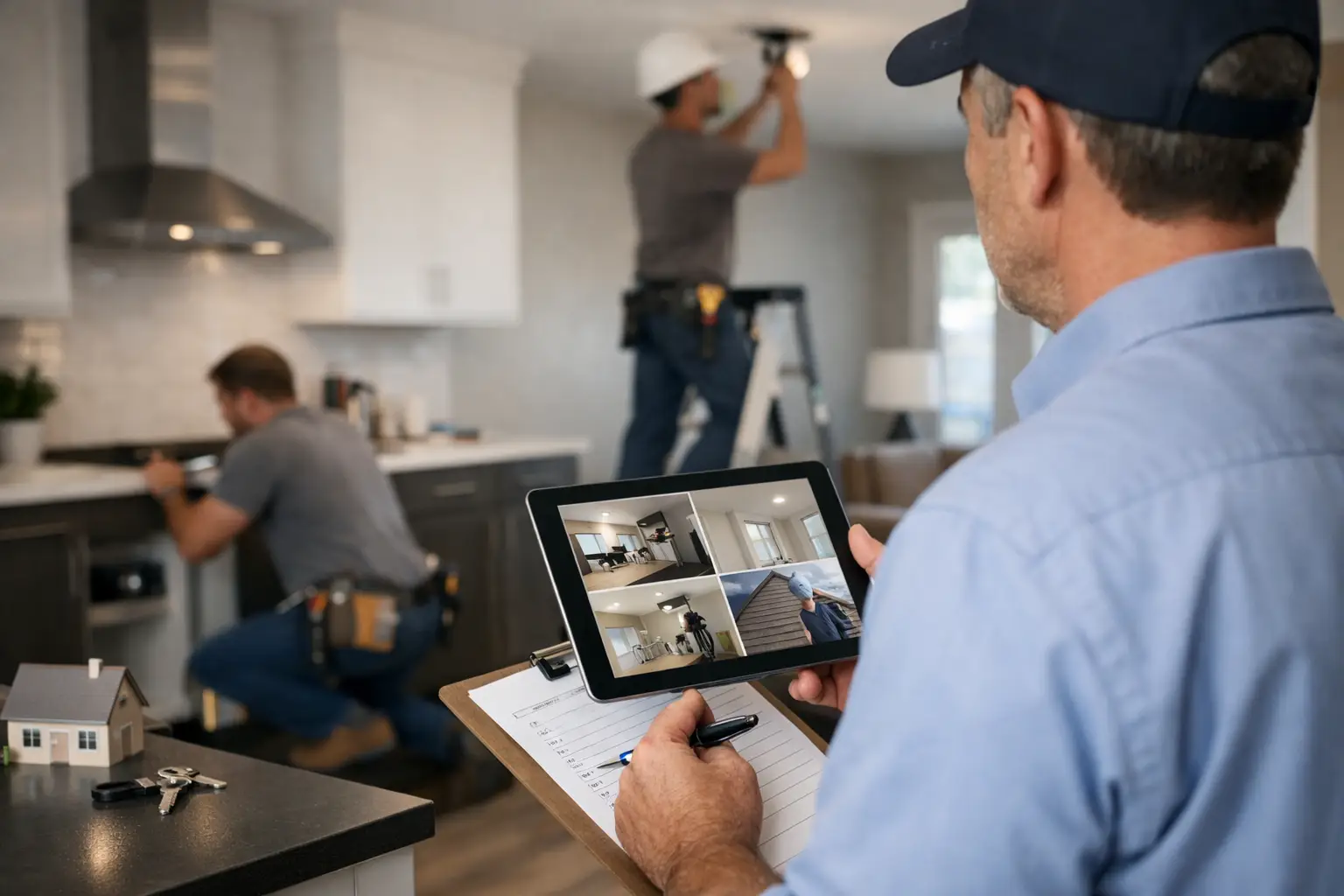
A repair can look finished at 4:30 p.m. and still create a callback at 8:00 a.m. the next day. For property managers, evaluating contractor repair quality is not about whether a patch is painted or a door closes once. It is about whether the work holds up, the unit is ready for the resident, the documentation is complete, and your team can close the ticket without chasing answers.
A vendor who completes jobs quickly but leaves inconsistent finishes, untested repairs, or vague notes creates hidden operating costs. Those costs show up as resident complaints, repeat dispatches, delayed turns, missing records, and staff time spent inspecting work that should have been right the first time.
Evaluating Contractor Repair Quality Beyond Appearance
Visual appearance matters, especially in occupied units and make-ready work. But a clean-looking repair is only one part of a complete job. Property operators need to evaluate quality through three connected standards: technical performance, finish quality, and operational closeout.
Technical performance asks whether the repair actually solved the reported issue. A drywall patch should be secure, properly taped, textured to match as closely as practical, and painted with appropriate coverage. A door repair should account for hinge condition, strike alignment, latch engagement, clearance, and repeated operation. A faucet repair is not complete because water is flowing – it must be checked for leaks, pressure, drainage, and fixture stability.
Finish quality addresses what the resident and leasing team see. Are paint edges clean? Is debris removed? Are screw heads flush? Does the repaired area look intentional rather than temporary? Perfect invisibility is not always realistic in an older property with discontinued materials, sun-faded paint, or prior layers of repairs. The standard should be professional, durable, and appropriate to the unit condition and approved scope.
Operational closeout is what separates a capable contractor from a vendor who simply says, “done.” You need a clear record of what was found, what was repaired, what materials were used when relevant, and whether follow-up is required. Without that record, the next person touching the work starts from zero.
Start With a Clear Definition of “Complete”
Most quality disputes begin before the technician arrives. A work order that says “repair wall” or “fix door” leaves too much room for interpretation. It may produce a technically acceptable repair that still misses the property manager’s actual need.
Define the outcome, not just the problem. For example, “repair damage near bedroom closet and blend texture/paint for move-in readiness” gives the contractor a usable finish standard. “Adjust entry door so it latches reliably, does not rub, and locks from exterior” defines functional verification. For larger repairs, note access constraints, occupied-unit requirements, approved materials, photo expectations, and whether the work needs a manager sign-off.
This does not mean your team must write a construction specification for every service call. It means the contractor should have a disciplined intake process that turns a maintenance request into a measurable scope. If a vendor needs repeated clarification on routine work, the issue is not just communication. It is a process gap.
Match the Standard to the Property and the Work
Not every repair needs the same level of finish. A common-area renovation, an occupied executive suite, and a utility-room patch require different approaches. The key is consistency with the agreed standard.
For turnover work, the standard is usually readiness: clean, functional, safe, and presentable for leasing or move-in. For occupied units, resident disruption, dust control, cleanup, and return visits matter more because the repair affects someone’s home. For commercial spaces, business hours, site safety, and access coordination can be just as important as the repair itself.
A strong contractor can adjust execution without lowering accountability. “Good enough” should never mean incomplete, undocumented, or likely to fail.
Use a Repeatable Field Inspection Process
Random inspections catch some problems. A repeatable inspection process catches patterns. Property managers should inspect a representative sample of completed work, with more attention on high-volume repair types, recurring vendors, large scopes, and jobs that affect resident safety or unit readiness.
A practical quality review should confirm the following:
- The reported issue was resolved, not merely covered or temporarily bypassed.
- The repair functions under normal use, including repeated opening, closing, running, locking, draining, or switching when applicable.
- The finish meets the agreed unit or property standard, with clean edges, secure materials, and no avoidable damage to surrounding surfaces.
- The work area is clean, accessible, and free of leftover debris, sharp materials, or unaddressed hazards.
- Photos, notes, labor detail, and any recommended follow-up are attached to the completed work order.
Photos should support verification, not substitute for it. A close-up photo of a repaired wall cannot show whether the texture flashes under light, whether the surface is properly secured, or whether a moisture source remains behind the damage. For recurring maintenance programs, GPS-verified arrival and completion records add useful accountability, but they do not prove craftsmanship on their own. Pair field data with quality controls.
Inspect the Details That Create Callbacks
Callbacks usually come from predictable failures. A repair may be rushed, a root cause may be missed, the wrong material may be used, or the technician may leave before testing the result. The best inspection questions are specific enough to expose those risks.
After drywall work, look for cracking at seams, poor adhesion, visible tape lines, uneven texture, incomplete paint coverage, and failure to address possible moisture or impact causes. After finish carpentry work, test alignment, fastener placement, caulk lines, hardware operation, and consistency with adjacent trim. After interior repairs involving water, confirm the source was addressed and not simply the visible damage.
You should also track when the repair was performed. A return visit within a few days may be valid if paint requires cure time, parts must be ordered, or access was unavailable. That is different from a callback caused by poor execution. Good vendors identify the difference, document it, and take ownership of workmanship issues.
Measure Contractor Quality With Operating Data
One inspection tells you about one job. A quality scorecard tells you whether a contractor is dependable across your portfolio. This is where property management teams move from opinions to performance management.
Track first-time completion rate, callback rate, average response time, time from dispatch to closeout, documentation compliance, and open work orders past the expected completion date. For turnover support, track whether repairs are completed by the committed deadline and whether the unit passes the final readiness walk without rework.
Numbers need context. A contractor handling emergency water damage or complex occupied-unit repairs may have longer closeout times than a vendor doing basic punch-list work. Compare similar work categories, not every ticket against one blanket target. The goal is not to punish exceptions. It is to identify avoidable variation.
Documentation quality is a leading indicator. When work orders consistently include clear findings, before-and-after photos, material notes, and recommendations, the contractor is showing control of the work. When closeout notes say only “fixed” or “completed,” your team has no useful audit trail and no reliable basis for future decisions.
Address Quality Failures Without Creating More Friction
When a repair misses the mark, the fastest path is a clear correction process. Document the issue promptly, provide photos when useful, state the expected correction, and set a return deadline based on urgency. Avoid vague feedback such as “this does not look right.” Specify the defect: loose trim at the lower corner, paint mismatch outside approved tolerance, door still rubbing at the jamb, debris left in the closet.
Then watch the contractor’s response. A professional vendor acknowledges the issue, clarifies any legitimate scope question, returns promptly, and records the correction. A vendor who argues obvious deficiencies, disappears after closeout, or repeatedly treats callbacks as new billable work is shifting operational risk back to your team.
There are trade-offs. The lowest hourly rate may look attractive until repeat trips, leasing delays, and staff oversight are included. The fastest vendor may not be the best choice for detailed finish work. A reliable maintenance partner should be able to explain which jobs require immediate response, which require a scheduled skilled trade visit, and what level of finish is realistic within the approved budget.
Build Quality Into the Vendor Relationship
The best results come from setting expectations before the first problem repair. Establish closeout requirements, communication channels, access procedures, billing detail, after-hours protocols, and a defined workmanship correction policy. Review performance regularly, especially during high-volume turn periods or after onboarding a new technician team.
Well Done Construction LLC applies this kind of field accountability through organized dispatch, documented repair history, and completion records designed for managed properties. The point is not more paperwork. It is less guesswork when your team needs to know what happened in a unit, who completed it, and whether the repair is ready to stay closed.
Your property team should not have to become a second quality-control department for every vendor. Set the standard, verify the right work, measure repeat performance, and require complete closeout. When contractor quality is visible and documented, repairs stop being a daily source of uncertainty and become a controlled part of operations.