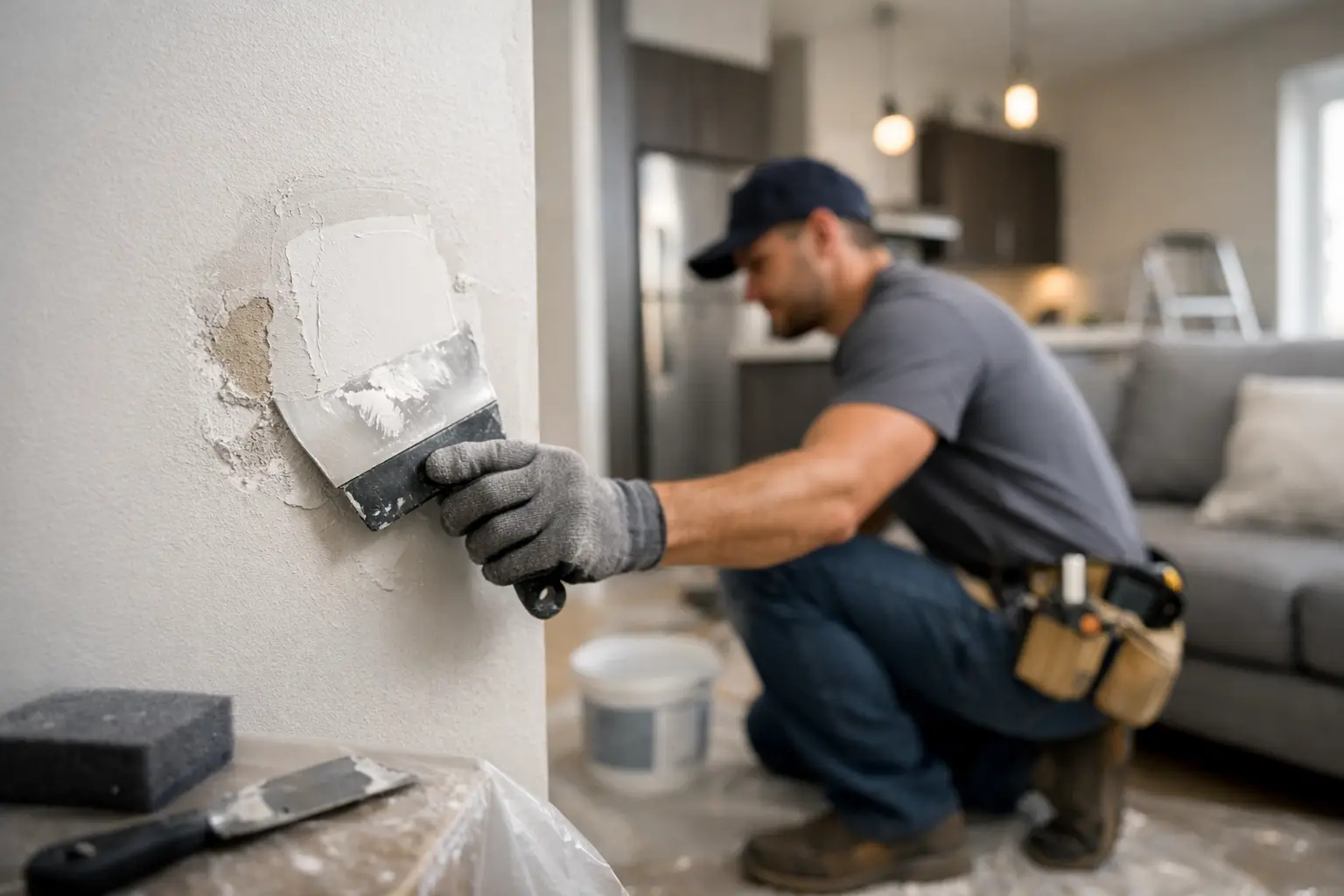
A damaged wall can hold up a make-ready faster than it should. One failed anchor, moving scuff, door impact, or plumbing access cut can turn into a paint delay, a failed inspection, or a resident complaint if the repair is not handled correctly. Apartment drywall patching services should restore the wall, protect the turn schedule, and give your team a clear record that the work is complete.
For property managers, drywall repair is not a cosmetic side task. It is part of keeping units rentable, common areas presentable, and maintenance operations under control. The right contractor does more than spread compound over a hole. They assess what caused the damage, match the repair to the wall condition, coordinate around occupancy, and close out the job without creating another item for your team to chase.
Why Small Drywall Damage Creates Big Operational Problems
Drywall issues rarely arrive one at a time. A unit turn may include anchor holes throughout the living room, damaged corners in the hallway, a dented bedroom wall, and an oversized opening left after electrical or plumbing work. In occupied units, the challenge is different: residents need prompt repairs, clean work areas, predictable access windows, and minimal disruption.
The patch itself may be straightforward. The operational cost is not. When a vendor misses an appointment, leaves sanding dust behind, or sends an invoice with no clear scope, the property team inherits the problem. Someone has to confirm what was repaired, schedule a return visit, answer resident questions, and determine whether painting can move forward.
That is why dependable drywall work needs a defined process. It should reduce handoffs between maintenance, leasing, vendors, painters, and ownership rather than add to them.
What Professional Apartment Drywall Patching Services Should Cover
A quality drywall repair starts with the size and type of damage. Small nail holes and minor dings generally need filling, sanding, and touch-up preparation. Larger holes require backing material or a replacement drywall section so the patch has structural support. Cracks need closer attention because they may be caused by settling, framing movement, moisture, or a previous repair that was never properly reinforced.
The goal is a flat, durable surface that disappears once primed and painted. That means using the correct patch method, applying compound in controlled layers, sanding cleanly, and feathering the repair beyond the damaged area. Rushing this work often produces visible ridges, flashing under paint, weak patches, or cracks that return after the unit is occupied.
Texture matching also matters. Smooth walls are generally faster to repair, but they still reveal poor sanding under direct light. Orange peel, knockdown, and other textured finishes require a closer match to avoid a repair that stands out from across the room. A contractor should identify the finish before beginning work instead of assuming one texture approach fits every building.
Repairs That Need More Than a Patch
Some damage should not be treated as a basic cosmetic repair. Water staining, soft drywall, repeated cracking, mold concerns, and bubbling paint can point to an active moisture problem. Covering those conditions without addressing the source wastes time and may create a larger liability later.
Likewise, a hole around an outlet, switch, plumbing penetration, or HVAC opening may need coordination with another trade. The repair has to maintain safe clearances and provide a clean finished surface after the underlying work is complete. The fastest path is not always the best path if it creates rework for electrical, plumbing, or paint crews.
A disciplined contractor flags these conditions early. Property managers need actionable information: patch and paint, investigate moisture, schedule trade coordination, or consider broader replacement. Zero guesswork is more valuable than a vague note that says drywall repaired.
A Better Workflow for Unit Turns and Occupied Repairs
Drywall repairs move faster when they are managed as part of the property workflow. For vacant units, the contractor should receive a clear scope, unit access instructions, deadline, and any related work that affects sequencing. If flooring, cabinets, electrical repairs, or painting are also scheduled, drywall work must happen in the right order to prevent damage to completed finishes.
For occupied units, communication and containment are equally important. The resident needs an arrival window and a realistic explanation of the work. The technician needs access confirmation, a clean workspace, and a plan for dust control. Sanding and texture work can be disruptive, so protecting nearby furnishings and cleaning the area before departure is part of a professional repair, not an optional extra.
A practical workflow includes documented dispatch, before-and-after photos when appropriate, notes on hidden conditions, and a completion record tied to the unit or work order. That documentation matters when a manager is handling dozens or hundreds of maintenance requests across a portfolio. It also helps establish repair history if the same location develops a recurring issue.
Well Done Construction LLC approaches repair work as an operating system for the property, not a loose collection of service calls. Mobile-first dispatch, GPS-verified completion, and organized repair records help managers confirm progress without tracking down technicians for updates.
Choosing the Right Scope Instead of the Cheapest Patch
The cheapest drywall quote is not always the lowest-cost decision. A basic patch can be appropriate for isolated, minor damage in a vacant unit scheduled for full repainting. It may not be the right choice for a high-visibility lobby wall, an occupied premium unit, or a recurring crack near a doorway.
Managers should consider the visible finish requirement, the likelihood of underlying damage, the painting plan, and the unit’s occupancy status. A repair that is acceptable before a full repaint may be unacceptable if the wall will receive only a spot touch-up. A small hole may require a larger feathered repair to blend properly, particularly on walls that receive strong natural light.
Scope clarity protects both the property and the contractor. It prevents a work order for “wall repair” from becoming an argument about whether texture, primer, paint matching, water-damage investigation, or multiple return trips were included. When the initial condition is documented, approval decisions are faster and billing is easier to reconcile.
When Replacement Is the Smarter Move
Patching is efficient, but it has limits. Multiple large holes clustered in one wall, extensive water damage, delaminated paper, or widespread cracking can make replacement more practical than repeated spot repairs. Replacement can create a cleaner finish and reduce future callbacks, especially during a major renovation or full turn.
The trade-off is added labor, debris, painting, and possible coordination with baseboards, trim, outlets, or fixtures. The correct decision depends on the condition of the wall and the standard expected for the space. A contractor should explain that choice in plain terms, with a recommendation tied to durability and appearance rather than simply pushing the larger job.
What Property Managers Should Expect From the Closeout
A drywall repair is not complete when the compound dries. Closeout should confirm that the work area was cleaned, the repair was sanded and prepared as scoped, and the unit or common area is ready for the next trade or final inspection. If paint is included, the finish should be reviewed under normal lighting, not just judged from a few feet away.
The closeout record should also make it easy to answer basic questions later: Which unit was serviced? What damage was found? Was there evidence of moisture? Was the wall patched or replaced? Did the work require a follow-up? Property teams should not have to dig through text messages and paper invoices to reconstruct a simple repair history.
For recurring needs, consistency matters as much as craftsmanship. The same standards for dispatch, access coordination, work quality, documentation, and invoicing should apply whether the request is one damaged corner or a batch of turnover repairs across several buildings.
Keep Wall Repairs From Becoming Schedule Problems
Apartment wall damage is routine. Contractor confusion, incomplete repairs, and missing documentation do not have to be. Set clear service expectations, use a repair partner that understands multifamily sequencing, and treat each patch as part of the larger operation.
When drywall work is completed cleanly, documented properly, and handed off on time, your maintenance team can move to the next priority instead of revisiting the last one.